The reading room · Astrology
How to read your birth chart, one placement at a time.
A birth chart shows celestial positions for a birth moment and place. Begin with one placement and learn its symbols as you go.
Three layers to look for
- Planet
- The theme being discussed.
- Sign
- Its style of expression.
- House
- The area of life it relates to.
Astrodienst’s introduction to astrology explains this framework.
Note those three parts separately. If the birth time is unknown, leave the house open.
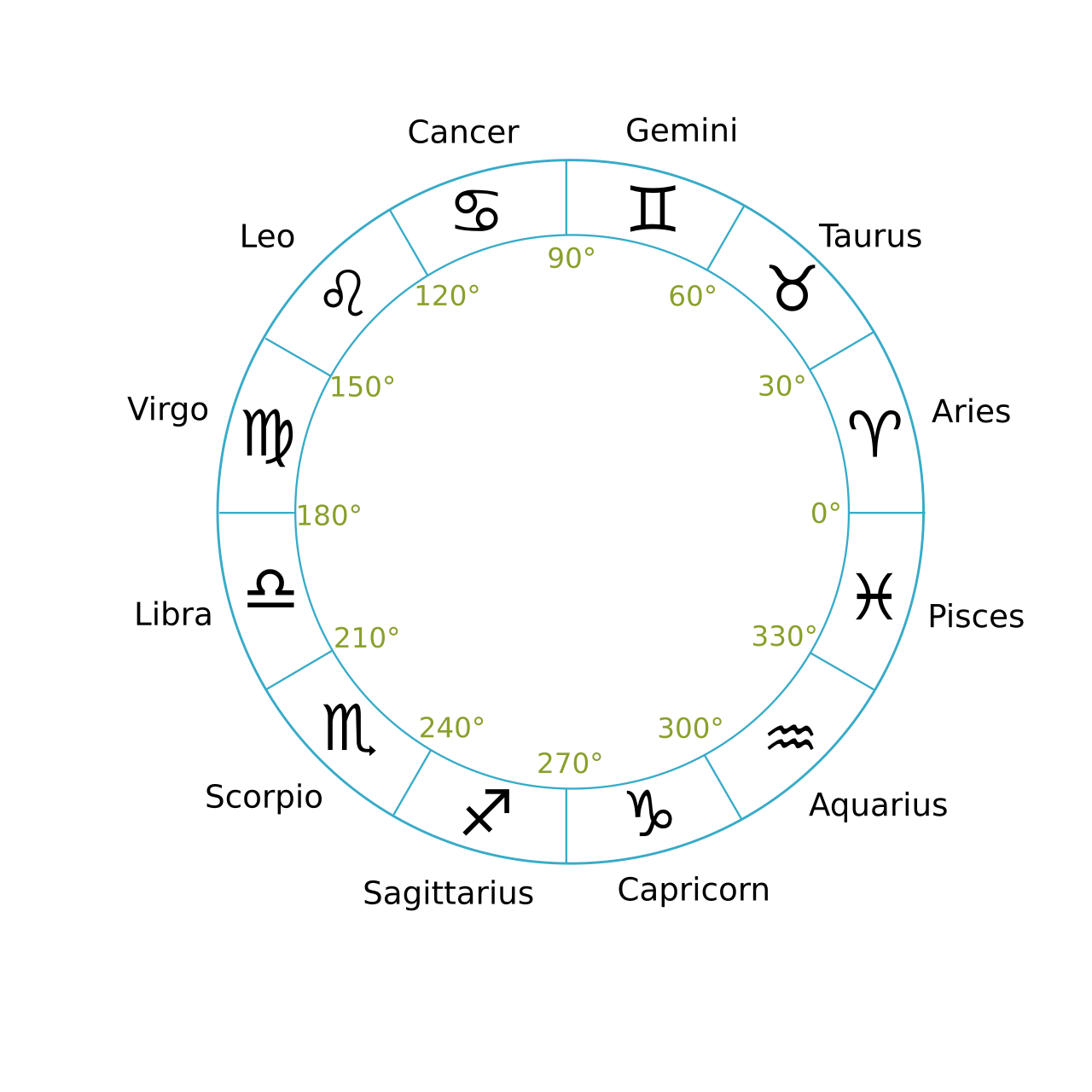
Start at 0°The 0° mark on the right is the beginning of Aries. Look for its symbol, ♈︎, just above that point.
Follow the signsMove counterclockwise from Aries to Taurus, then Gemini. The key below helps you match each symbol to its name.
Read the degreesEach sign spans 30°: Taurus begins at 30° and Gemini at 60°. All twelve signs make one complete 360° circle.
Suppose the Moon is in Taurus in the fourth house: emotional habits, expressed through steadiness and sensory experience, in the setting of home and family. You might ask, “Does a familiar space or routine help me settle?”
Taurus and the second house are not interchangeable. Signs divide the zodiac; houses depend on local orientation and the house system being used.
Start with the Sun, Moon and rising sign
- Sun: commonly associated with identity.
- Moon: emotional patterns and habits.
- Rising sign: the sign at the eastern horizon at birth.
Read one placement at a time and note a specific experience it brings to mind.
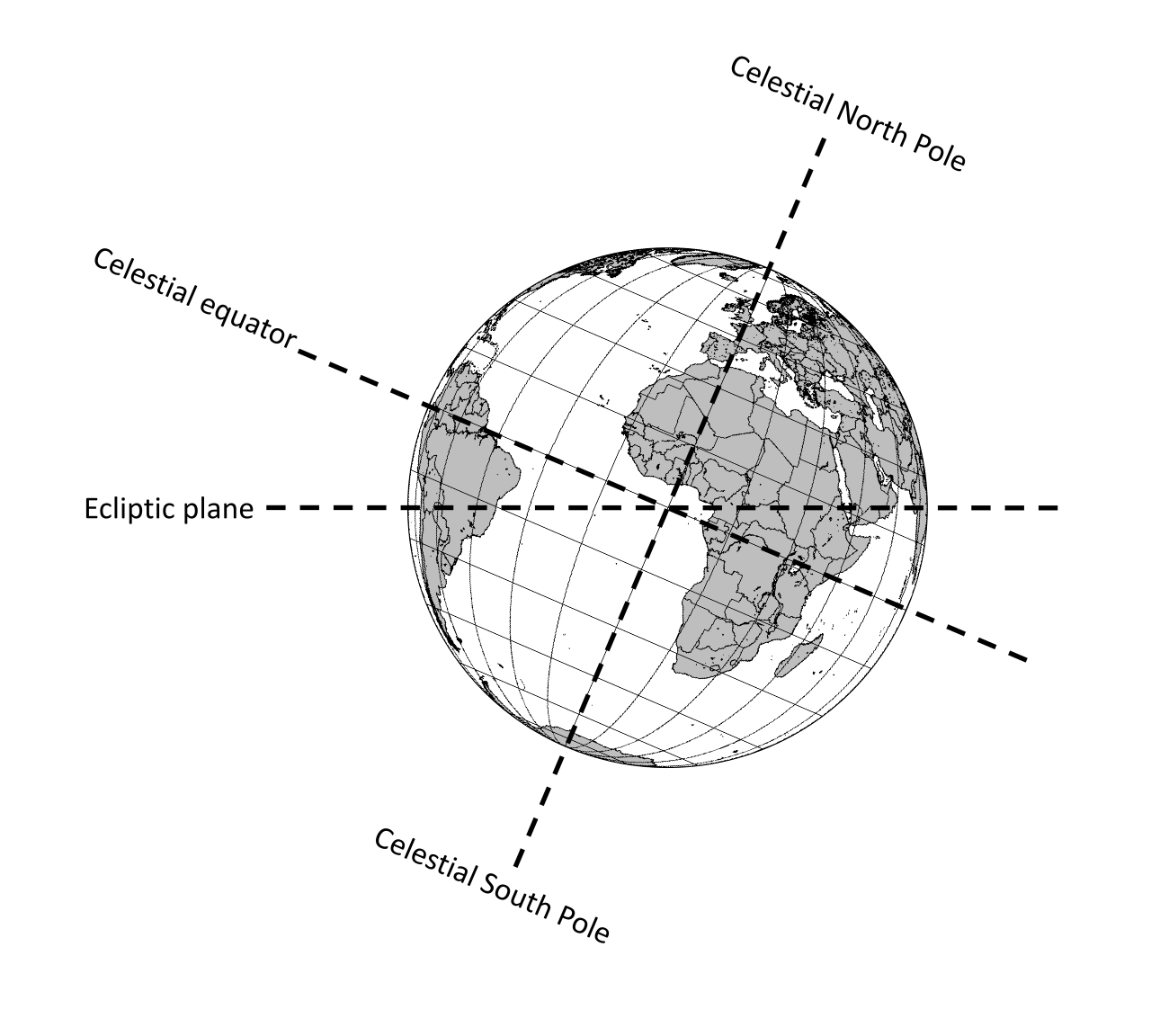
The ascendant, often labelled ASC, is a point rather than a celestial body: the eastern intersection of the horizon and the ecliptic. Its zodiac sign is the rising sign. Astrology also groups the Sun and Moon with “planets” as a term of practice; astronomically, they are a star and Earth’s natural satellite.
In pictures: the ecliptic and the celestial equator
What are aspects in a chart interpretation?
Aspects describe angular relationships between celestial positions along the zodiac. These relationships are used in planetary interpretations.
- Conjunction: near 0°
- Square: near 90°
- Trine: near 120°
- Opposition: near 180°
The allowed distance from an exact angle is called an orb.
Why your birth time matters
The rising sign and house positions depend on the birth time and place. If the time is uncertain, those parts of the chart need to be treated as uncertain too. Some other placements can also change within a day, so a date alone is not a substitute for complete information.
If you only know “morning”, keep that uncertainty visible. Entering noon does not make it a verified birth time. You can still learn the vocabulary without a precise time. For features that depend on the angles and houses, such as City, accurate birth information matters.
Try a simple reading order
- Check the birth details used for the chart.
- Locate one planet and note its sign.
- Add the house only when the birth time supports it.
- Read one interpretation, then relate it to a specific experience rather than your entire life.
The wheel and 3D view in Meet G’s birth chart feature offer two ways to explore the same chart. Begin with a placement you can identify, then follow the questions it raises. As you become familiar with the chart, you can connect its themes with your own experiences and revisit them over time.
If your time is uncertain, the birth-time guide explains what you can still read and what to leave open.
Birth charts
Explore your natal chart in 3D or as a wheel, read planetary placements and talk with G. Learn which birth details you need and what an unknown time changes.
AstrologyTarot and astrology
Understand what tarot and astrology use, how their readings differ, and how both fit inside Meet G.
CityRelocation charts, explained
Learn what changes in a relocation chart, what stays the same, and why an accurate birth time matters for City.