The reading room · Tarot
One tarot card or three? Choosing a spread.
A one-card reading lets you stay with one image and its meaning. A three-card reading gives you a sequence to follow and connections to explore. Choose according to the question you want to spend time with.
When one card is enough
One card works well as a short reflection. Try “What deserves my attention today?” Read the card, then write one sentence about how it relates to your situation. If its meaning surprises you, spend a little longer with the image.
Past, present and future
Meet G’s three-card spread uses past, present and future, from left to right. This familiar sequence also appears in Labyrinthos’s guide to three-card layouts.
Keep those positions in mind as you turn over the cards. If your question concerns the coming month, write that timeframe down too; a future position does not come with a built-in date.
Here is a deliberately chosen teaching example, with all three cards upright. The question is: “What should I pay attention to as I prepare my first exhibition?”
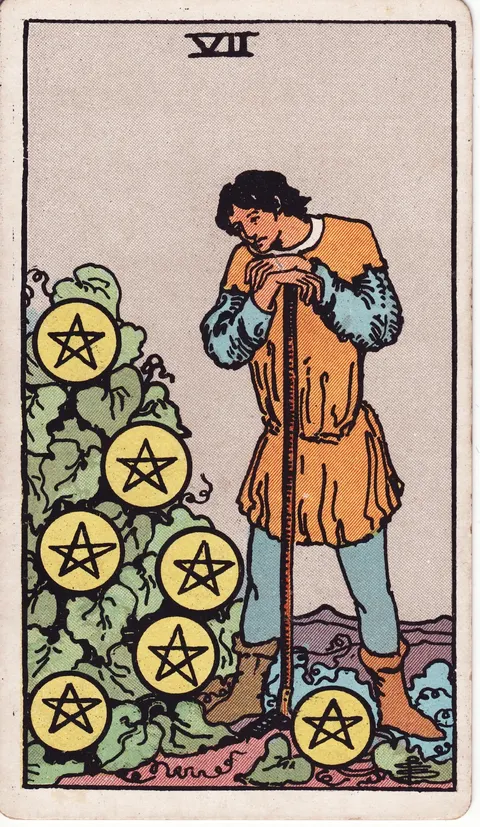
The figure pauses beside what has grown: a moment to review the work already put in.
Which pieces are finished, and which have stayed half-done?
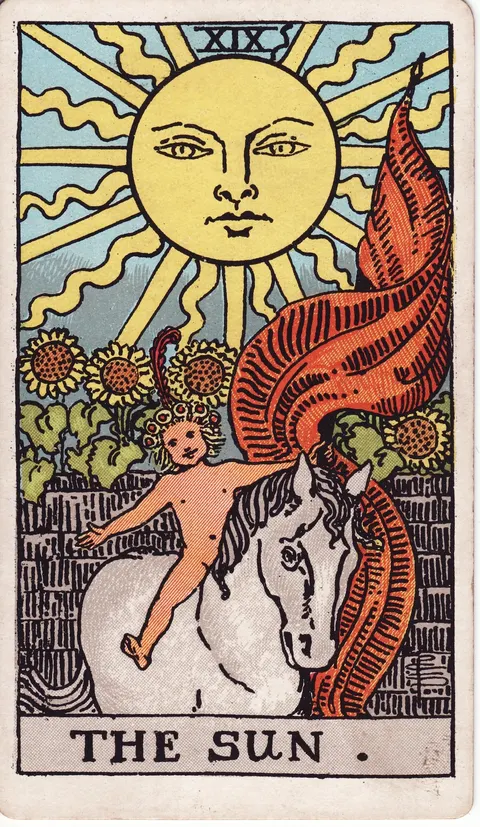
In the present, the Sun can suggest bringing your work into view and hearing a response.
Which pieces could you show someone now?
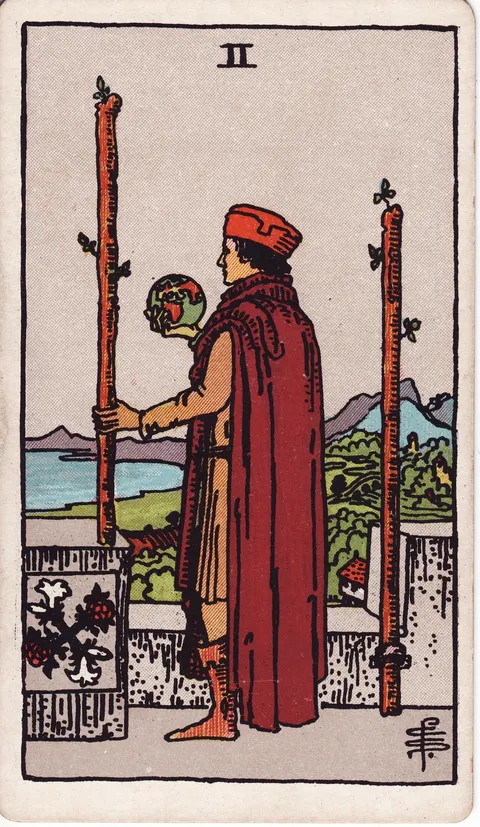
The figure looks outward with a globe in hand, inviting a wider view of the next step.
Would you try a small exhibition or an online portfolio next?
The future position explores where the story might lead from here. Keep that reading open as your choices and circumstances develop.
Read the position as well as the card
Read together, the three cards could become a note like this:
I have prepared a body of work; I can share a small selection for feedback, then decide how to show it next.
If the Sun appeared in the past position, the question would change. The Sun card guide gives examples of how position and orientation shape a reading.
Keep the reading small enough to use
Finish with one thing you want to think through or try. If the interpretations conflict, note the tension instead of forcing a neat story.
Keep the question and positions in mind as you read. After a few days, consider what happened and whether your first interpretation still fits.
Tarot in Meet G offers one card, a past–present–future spread and a ten-card Celtic Cross. You can explore the interpretation and talk it through with G, all within the same app.
For more examples, see how to ask a tarot question.
Questions for tarot
Turn a broad concern into a clear tarot question, with examples for work, relationships and everyday choices.
Inside Meet GTarot readings
Bring a question, choose a tarot spread, draw your cards and explore the reading with G. Revisit past readings and keep a note of your own response.
TarotThe Sun tarot card
Explore the Sun’s upright and reversed meanings, with examples that connect the card to a question and its place in a spread.